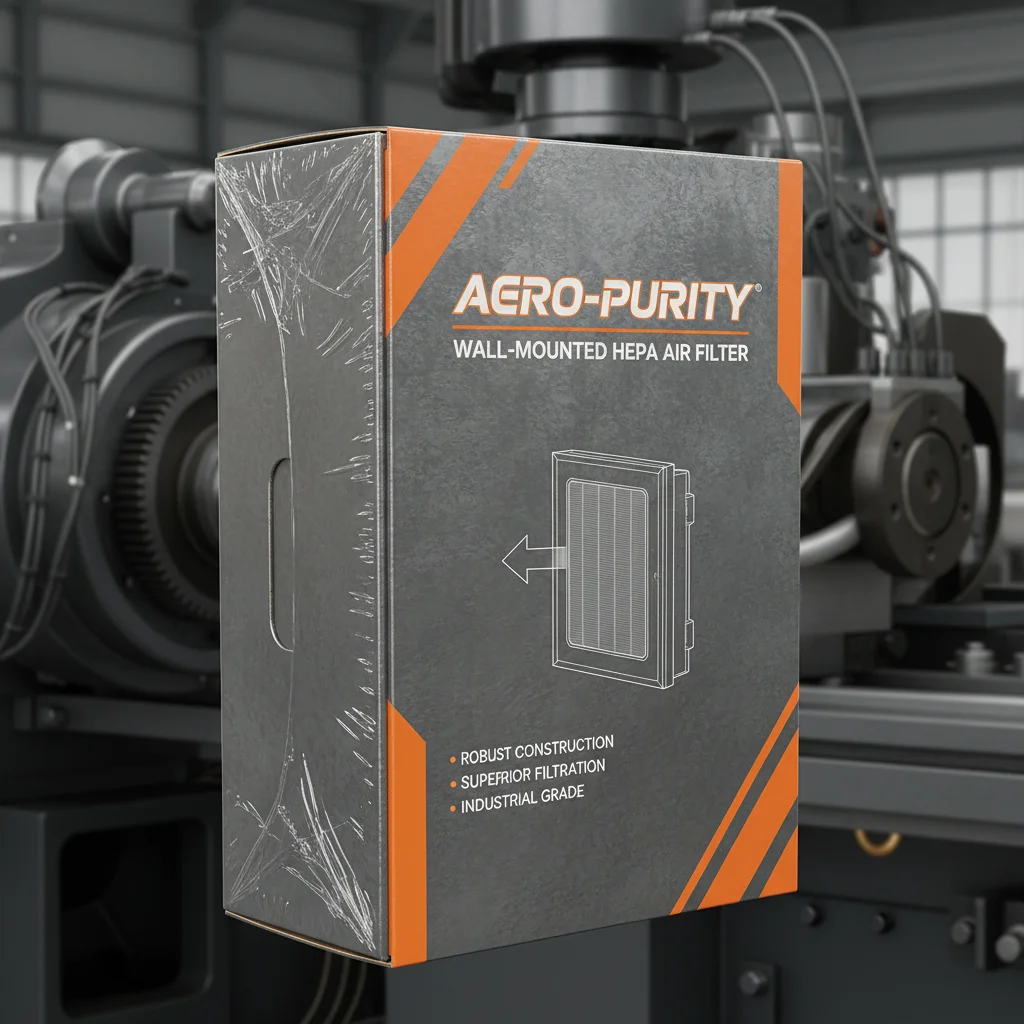
Maintaining a pristine working environment is no longer just a luxury but a critical operational requirement in modern industrial facilities. The implementation of wall mounted air filtration systems has emerged as a primary solution for enterprises looking to optimize their floor space while ensuring the highest standards of air purity. By removing airborne contaminants, metallic dust, and volatile organic compounds, these systems protect both the workforce and the precision machinery.
Globally, the shift toward "Green Manufacturing" has pushed industries to rethink how they handle emissions at the source. Traditional bulky filtration units often obstruct workflow and require extensive ductwork, whereas wall-mounted solutions provide a streamlined, efficient alternative. This transition is particularly vital in sectors involving wire mesh weaving and welding, where microscopic particulates can compromise product quality and operator health.
Understanding the nuances of air purification technology allows plant managers to make informed decisions that balance cost, efficiency, and regulatory compliance. Whether you are operating a small-scale workshop or a massive industrial plant, integrating a high-performance wall mounted air filtration strategy ensures long-term sustainability and operational excellence.
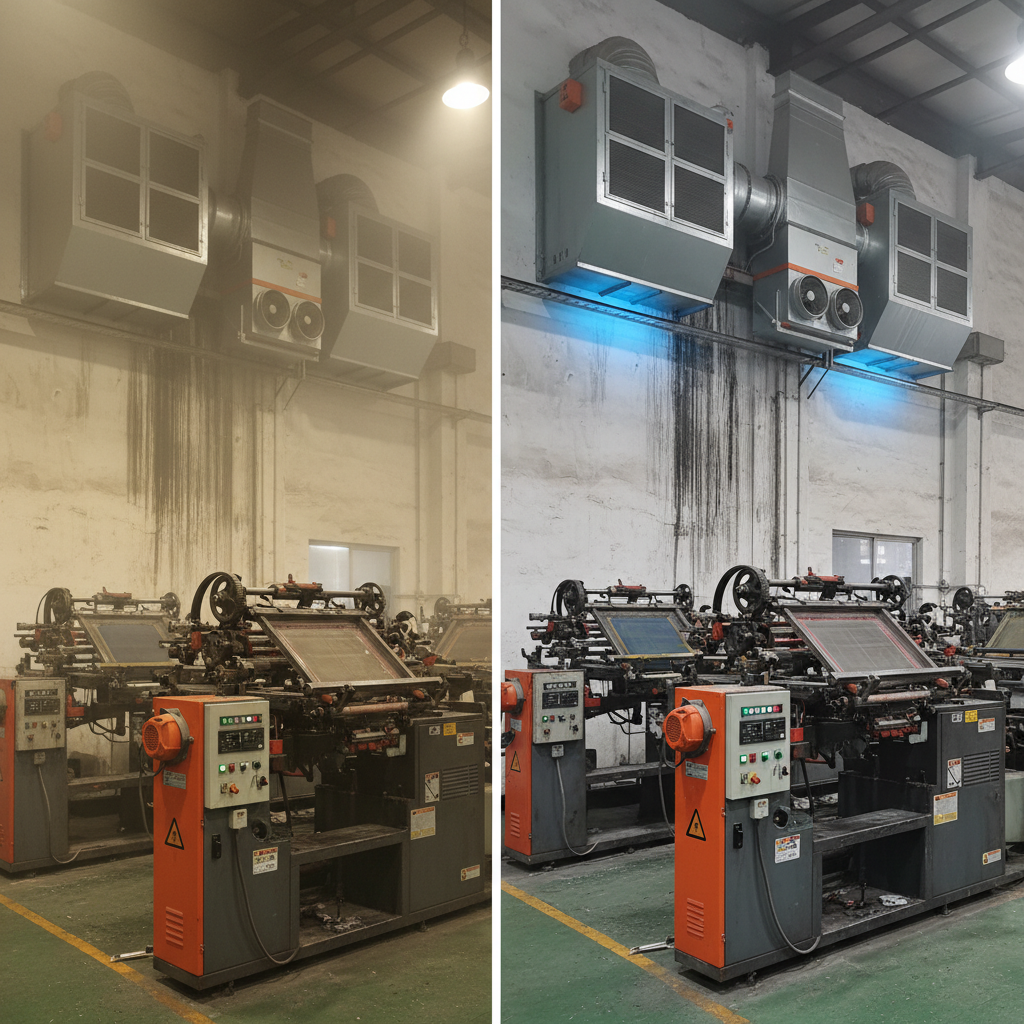
Global Relevance of Wall Mounted Air Filtration
In the current global industrial landscape, air quality is governed by stringent standards such as ISO 14001 and various OSHA guidelines. The rise of specialized manufacturing, particularly in metal wire mesh and welding equipment, has increased the concentration of hazardous particulates in the air. wall mounted air filtration serves as a critical line of defense, preventing respiratory illnesses and ensuring that factories meet international health and safety audits.
Furthermore, the demand for high-precision output in the metallurgical industry means that even a small amount of floating dust can cause defects in the weaving process or weld spoilage. By implementing localized filtration systems, companies can reduce scrap rates and increase the overall lifespan of their expensive machinery, turning a safety requirement into a competitive economic advantage.
Defining Wall Mounted Air Filtration in Industry
At its core, wall mounted air filtration refers to a specialized air purification system designed to be installed directly onto vertical surfaces, utilizing high-efficiency particulate air (HEPA) or carbon filters to scrub the air. Unlike centralized HVAC systems that treat air for the entire building, these units are often used for "source capture," meaning they pull contaminated air away from the operator and the machine before it can disperse into the wider facility.
In the context of mesh weaving and welding machinery, these systems are indispensable. When a welding mesh machine operates, it generates fumes and fine metallic particles. A wall-mounted unit positioned strategically above the work zone creates a localized vacuum, ensuring that the air the technician breathes remains clean while the filtration media traps the harmful residues.
This approach integrates seamlessly into the modern "lean manufacturing" philosophy. By eliminating the need for massive floor-standing units and complex ceiling-dropped ducts, factories can maximize their usable square footage, allowing for more production lines or better material flow, all while maintaining a sterile environment.
Core Components of Effective Air Filtration
The efficiency of wall mounted air filtration depends on several key components. First is the Pre-Filter, which captures larger particles to prevent the more expensive primary filters from clogging prematurely. Second is the High-Efficiency Filter (often HEPA or ULPA), which is responsible for trapping 99.97% of particles as small as 0.3 microns, crucial for metallurgical dust.
A critical but often overlooked element is the Suction Motor and Fan Assembly. The airflow velocity must be precisely calibrated; if it is too low, contaminants will escape into the room, but if it is too high, it may create turbulence that pushes dust away from the intake. Advanced wall mounted air filtration systems now include Variable Frequency Drives (VFDs) to adjust power based on real-time air quality sensors.
Finally, the chassis and housing must be constructed from corrosion-resistant materials, such as powder-coated galvanized steel or stainless steel. This is especially important in weaving and welding shops where chemical fumes and moisture can lead to rapid degradation of the equipment, ensuring that the system remains durable over a decade of heavy industrial use.
Performance Factors and Scalability
When evaluating wall mounted air filtration, scalability is the most significant factor for growing businesses. A modular approach allows a factory to start with a single unit for one welding machine and gradually add more as their production capacity increases. This prevents heavy upfront capital expenditure while ensuring that the air quality remains consistent regardless of the plant's size.
Another key performance indicator is the "Clean Air Delivery Rate" (CADR), which measures how quickly a system can exchange the air in a specific volume. In environments with high dust loads, such as those using wire mesh punching machines, the filtration rate must exceed the rate of particle generation to avoid accumulation.
Comparative Efficiency of Wall Mounted Air Filtration Methods
Global Applications and Industrial Use Cases
Across Europe and North America, where labor laws regarding workplace toxicity are extremely strict, wall mounted air filtration is a standard installation in any precision engineering shop. In these regions, the focus is often on removing ozone and nitrogen oxides produced during the welding of stainless steel wire mesh.
In rapidly industrializing zones in Southeast Asia and India, these systems are being adopted by SMEs (Small and Medium Enterprises) to upgrade their facilities without the need for major structural renovations. For example, in remote industrial zones where central air conditioning is unavailable, wall-mounted units provide a standalone solution that keeps the air breathable and protects high-precision mesh weaving machines from dust-induced wear and tear.
Long-term Value and Sustainability Benefits
The long-term value of investing in wall mounted air filtration extends far beyond mere compliance. From a financial perspective, clean air reduces the frequency of machine maintenance. When metallic dust is filtered out of the air, it doesn't settle on the guides and bearings of a Wire Mesh Welding Machine, thereby reducing friction and extending the mean time between failures (MTBF).
From a human-centric angle, the impact on employee health is immeasurable. Reducing the inhalation of metallic particulates leads to lower absenteeism and higher worker morale. When employees feel that their safety is a priority—evidenced by the installation of visible, high-tech air filtration—trust in the organization increases, leading to higher productivity and lower staff turnover.
Sustainability is also a key driver. Modern wall-mounted systems are designed for energy efficiency, utilizing low-wattage motors and washable pre-filters that reduce the amount of landfill waste. By optimizing the air quality locally, factories can also reduce the load on their primary HVAC systems, leading to significant energy savings over the course of a fiscal year.
Future Trends in Filtration Technology
The future of wall mounted air filtration is inextricably linked to the "Industry 4.0" movement. We are seeing the integration of IoT (Internet of Things) sensors that can monitor filter saturation in real-time and automatically alert maintenance teams via a mobile app when a filter needs replacing. This shifts the maintenance model from "scheduled" to "predictive," eliminating unnecessary downtime.
Materials science is also playing a role, with the development of graphene-based filters that offer higher airflow with even smaller pore sizes. These innovations will allow wall-mounted units to become smaller and quieter while increasing their capacity to capture sub-micron particles, making them even more viable for tight workshop spaces.
Furthermore, we expect to see a rise in "smart-sync" systems, where the wall mounted air filtration unit communicates directly with the mesh weaving machine. When the machine starts a high-dust operation, the filtration unit automatically ramps up its suction power, and when the machine enters standby mode, the filter drops to a low-energy "maintenance" flow.
Technical Analysis of Wall Mounted Air Filtration Implementations
|
Filtration Type
|
Target Contaminant
|
Airflow Volume (m³/h)
|
Maintenance Cycle
|
| Mechanical HEPA |
Metallic Dust/Fumes |
500 - 1200 |
Quarterly |
| Activated Carbon |
VOCs / Odors |
300 - 800 |
Bi-Annually |
| Electrostatic |
Fine Smoke/Haze |
800 - 2000 |
Monthly Clean |
| Hybrid System |
Mixed Industrial Waste |
600 - 1500 |
Variable |
| ULPA Specialized |
Ultra-fine Particles |
200 - 600 |
Strict Monthly |
| Standard Pre-Filter |
Coarse Debris |
1000 - 3000 |
Weekly |
FAQS
Wall mounted air filtration is generally easier to install and maintain as it does not require access to the roof or ceiling plenum. It is designed for source capture, meaning it is placed closer to the point of pollutant generation (like a welding machine), whereas ceiling systems are often designed for general room air circulation. This makes wall-mounted units more efficient for targeting specific industrial fumes.
Yes, provided you use a distributed network of units. Rather than one giant central purifier, installing multiple wall-mounted units at each workstation creates "clean zones." This is often more effective than a central system because it prevents contaminants from traveling across the factory floor to other areas before being filtered.
This depends on the dust load. Typically, pre-filters should be cleaned or replaced every 2-4 weeks, while primary HEPA filters can last 6-12 months. However, in high-intensity mesh weaving environments with significant metallic dust, we recommend using a pressure-drop gauge to determine exactly when the filter is saturated and needs replacement.
Standard HEPA filters capture particles but not gases. To remove odors and chemical fumes, you must choose a wall mounted air filtration unit that includes an activated carbon stage. The carbon adsorbs volatile organic compounds (VOCs) and odors, while the HEPA stage handles the physical particulates.
Modern units are surprisingly efficient. Most use high-torque, low-wattage brushless motors. When compared to the cost of running a full-factory ventilation system 24/7, localized wall-mounted filtration is significantly more cost-effective, as you only power the units in the zones where machinery is actively operating.
Industrial units do produce some sound, but most are equipped with acoustic dampening liners and low-noise fans. Since they are mounted on the wall and placed at a strategic distance from the operator's ears, the noise level is usually well within OSHA safety limits and does not interfere with communication in the workshop.
Conclusion
In conclusion, the integration of wall mounted air filtration represents a strategic intersection of health, safety, and operational efficiency. By capturing pollutants at the source, manufacturers of wire mesh and welding equipment can protect their workforce from hazardous dust, extend the operational life of their machinery, and comply with increasingly strict global environmental standards. The transition from general ventilation to targeted, wall-mounted filtration is a hallmark of a sophisticated, modern production facility.
Looking ahead, the adoption of smart sensors and sustainable filter materials will only further enhance the value proposition of these systems. For businesses aiming to scale their production while maintaining an eco-friendly and safe footprint, investing in high-quality air purification is not just a regulatory necessity—it is a commitment to excellence. We encourage plant managers to audit their current air quality and explore modular filtration solutions to future-proof their operations. Visit our website: www.meshmachinery.com