The emergence of the battery powered air filter has revolutionized how industrial and residential spaces manage air quality, especially in environments where fixed power infrastructure is absent. By integrating high-capacity lithium batteries with advanced filtration media, these devices offer unprecedented mobility, allowing users to scrub pollutants from the air in real-time, regardless of their location.
In the context of heavy manufacturing and specialized equipment production, maintaining a clean breathing zone is critical for operational safety and worker health. The implementation of a battery powered air filter ensures that fine particulate matter, metallic dust, and volatile organic compounds are captured efficiently, reducing the risk of long-term respiratory issues in challenging workshop environments.
Globally, the shift toward portable air purification is driven by a growing awareness of indoor air quality (IAQ) and the need for rapid-deployment health solutions. Whether used in emergency response, remote mining sites, or high-precision welding shops, the battery powered air filter represents a synergy of energy storage technology and fluid dynamics designed to protect human life.

Global Relevance of Battery Powered Air Filters
Across the globe, the demand for portable air purification has surged as urbanization and industrialization increase the concentration of airborne pollutants. According to environmental health guidelines, the ability to deploy a battery powered air filter in "dead zones" where HVAC systems fail to reach is no longer a luxury but a safety necessity.
From the smog-heavy cities of Southeast Asia to the dust-prone mining regions of Africa and Australia, these devices bridge the gap between static infrastructure and mobile health protection. They solve the critical challenge of "localized pollution," where specific tasks—such as mesh welding or chemical mixing—create concentrated plumes of toxins that need immediate, localized removal.
Defining the Modern Battery Powered Air Filter
At its core, a battery powered air filter is a self-contained atmospheric cleaning system that utilizes an onboard energy source to drive a fan, pushing contaminated air through a series of filtration media. Unlike traditional air purifiers that require a constant AC wall connection, these units are designed for agility, allowing them to be moved exactly where the pollution source is most intense.
In modern industry, these devices are often integrated into Personal Protective Equipment (PPE) or deployed as small-scale area scrubbers. They represent a transition from passive filtration (like simple masks) to active filtration, where the machine does the work of pulling air through dense HEPA or activated carbon layers, reducing the breathing resistance for the user.
This technology is particularly vital for humanitarian needs in post-disaster zones or temporary medical clinics. When power grids are destroyed, the battery powered air filter provides a lifeline, ensuring that sterile environments can be maintained and that medical staff are protected from airborne pathogens and debris.
Core Components of Portable Filtration Systems
The efficiency of a battery powered air filter relies heavily on the synergy between its power management system and its filtration stages. High-density lithium-ion or LiFePO4 batteries are typically used to ensure a high energy-to-weight ratio, providing hours of continuous operation without adding excessive bulk to the device.
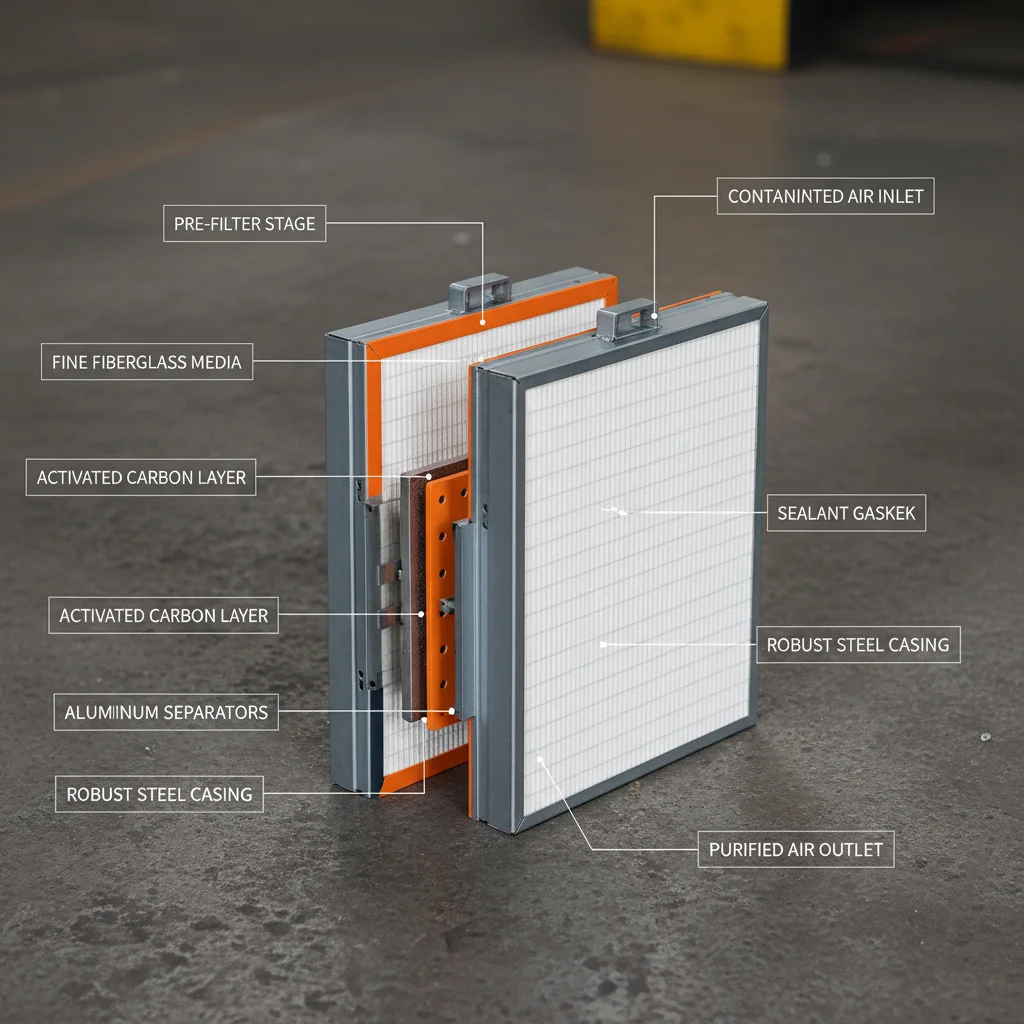
Central to the performance of any battery powered air filter is the filtration medium. Most professional-grade units employ a multi-stage approach: a pre-filter for large particles, a HEPA filter for microscopic pollutants (0.3 microns), and an activated carbon layer to neutralize odors and gaseous chemicals.
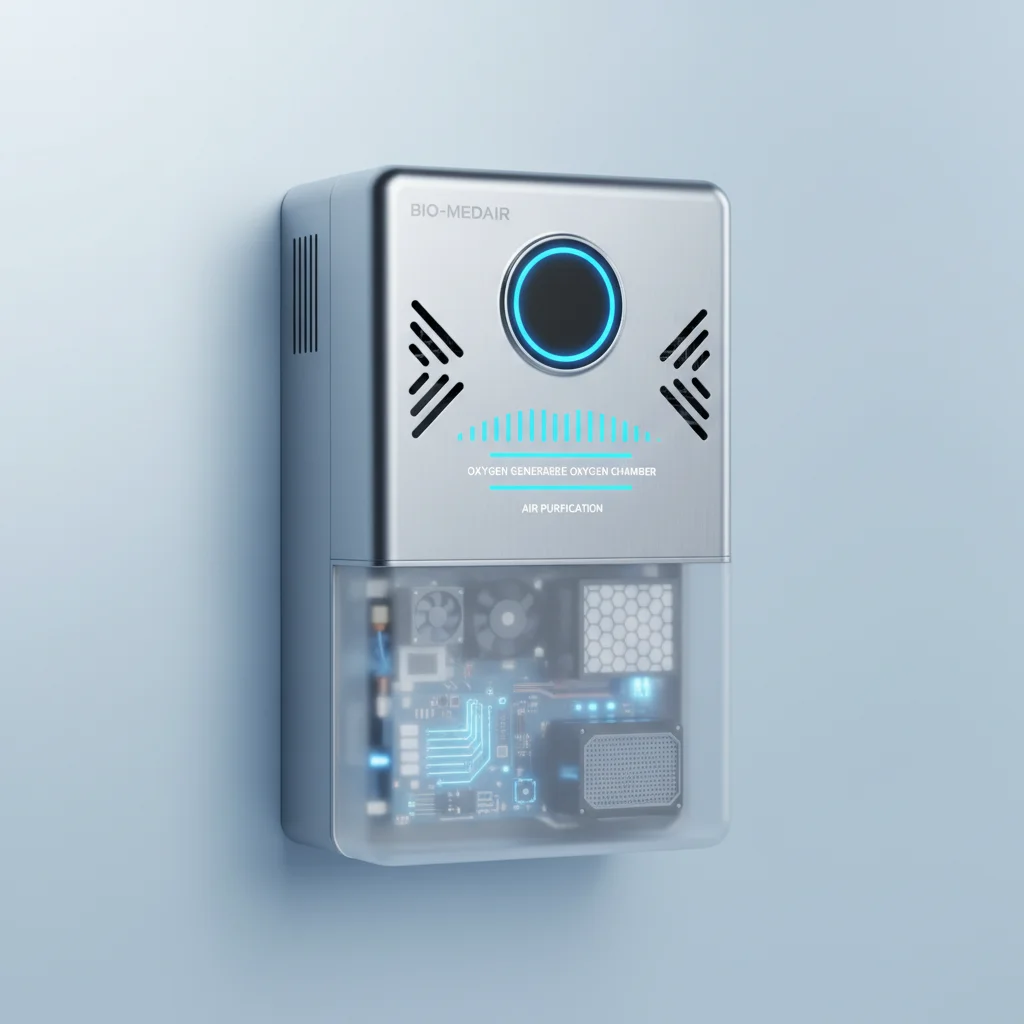
Furthermore, the airflow dynamics—governed by the brushless DC motor—must be optimized to maximize the Clean Air Delivery Rate (CADR) while minimizing battery drain. Intelligent sensors often accompany these components, automatically adjusting fan speed based on the detected particulate concentration to extend operational longevity.
Performance Metrics and Efficiency Factors
Evaluating the effectiveness of a battery powered air filter requires looking beyond simple airflow. Key metrics include the filtration efficiency percentage, the noise-to-performance ratio, and the battery discharge curve under maximum load. For industrial users, the weight of the unit is a critical factor, as portability is the primary reason for choosing a cordless solution over a wired one.
When comparing different models, engineers often look at the "pressure drop" across the filter. A higher-quality filter may capture more particles but requires a more powerful motor, which in turn consumes more battery. Balancing these trade-offs is essential for creating a device that is both effective and sustainable for a full work shift.
Performance Comparison of Battery Powered Air Filter Technologies
Industrial Applications and Real-World Use Cases
In the specialized field of wire mesh machinery, such as the production of welding mesh or punching machines, the atmosphere can become saturated with metallic dust and ozone. A battery powered air filter can be positioned directly at the point of emission, scrubbing the air before it enters the operator's breathing zone, thereby significantly improving occupational health standards.
Beyond the factory floor, these units are indispensable in remote industrial zones. For instance, during the maintenance of heavy electrical equipment in outdoor substations, technicians use a battery powered air filter to protect against environmental allergens and industrial pollutants where no power outlets are available.
Long-Term Value and Sustainability Gains
The long-term value of adopting a battery powered air filter lies in the reduction of healthcare costs and the increase in worker productivity. By mitigating the risk of respiratory illness, companies see a decrease in sick leave and an increase in overall workforce longevity. The logical angle is clear: investing in air quality is an investment in the most valuable asset—the human operator.
From a sustainability perspective, the shift toward rechargeable battery systems reduces the reliance on disposable filtration masks, which contribute significantly to landfill waste. Modern units are designed with washable pre-filters and recyclable HEPA cartridges, aligning industrial operations with global "Green Industry" initiatives.
Emotionally, providing employees with high-tech, portable protection fosters a culture of trust and care. When a worker knows that their employer has provided a top-tier battery powered air filter, it enhances their sense of dignity and safety, leading to higher morale and better quality control in precision manufacturing.
Future Innovations in Cordless Air Purification
The future of the battery powered air filter is inextricably linked to the evolution of solid-state batteries and nanotechnology. Solid-state power sources promise to double the runtime of portable purifiers while eliminating the fire risks associated with liquid electrolytes, making them safer for use in volatile industrial environments.
We are also seeing a trend toward "Smart Filtration," where AI-driven sensors analyze the chemical composition of the air in real-time and adjust the filtration media's polarity or fan speed. This digital transformation ensures that the battery powered air filter uses energy only when necessary, further extending battery life.
Integration with wearable technology is the next frontier. Future units may sync with a worker's smartwatch to provide alerts when the filter is saturated or when the air quality in a specific zone exceeds safe thresholds, creating a fully integrated safety ecosystem.
Comparison of Future Battery Powered Air Filter Technologies
| Technology Type |
Energy Efficiency |
Filtration Grade |
Expected Lifespan |
| Standard Li-ion |
Moderate (6/10) |
HEPA H13 |
2-3 Years |
| Solid-State Battery |
High (9/10) |
HEPA H14 |
5-7 Years |
| Nano-Fiber Mesh |
High (8/10) |
Ultra-Low Particulate |
3-4 Years |
| AI-Adaptive Unit |
Maximum (10/10) |
Dynamic Filtering |
4-6 Years |
| Graphene-Filter |
Moderate (7/10) |
Molecular Level |
5+ Years |
| Hybrid Plasma |
Low (5/10) |
Pathogen Neutralizer |
2-4 Years |
FAQS
Depending on the battery capacity and fan speed, most professional battery powered air filters last between 4 to 12 hours on a single charge. High-efficiency models utilizing LiFePO4 batteries tend to offer longer runtimes and more charge cycles, making them ideal for full-shift industrial use.
No, these devices are designed as supplementary tools. While they are incredibly effective for "spot cleaning" or providing personal breathing zones, they lack the cubic-feet-per-minute (CFM) capacity to purify an entire warehouse. They should be used to complement larger systems in areas of high pollution.
For metallic dust, a combination of a high-density pre-filter and a HEPA H13 filter is recommended. The pre-filter captures larger metallic shards, preventing the HEPA filter from clogging too quickly, while the HEPA layer ensures that microscopic fumes are trapped before they can be inhaled.
Standard units may not be safe. For environments with flammable gases, you must ensure the battery powered air filter is "Intrinsically Safe" or ATEX certified. These specialized versions prevent electrical sparking that could ignite airborne vapors.
Replacement frequency depends on the air quality. In heavy industrial settings, pre-filters may need weekly cleaning, while the main HEPA filter should be replaced every 3-6 months. Using a sensor-equipped model can provide an accurate "filter life" percentage to guide replacements.
To extend runtime, use the "Auto" mode rather than "Max" speed. Regularly cleaning the pre-filter also reduces the strain on the motor, as the fan doesn't have to work as hard to pull air through a clogged medium, thereby saving battery energy.
Conclusion
The implementation of a battery powered air filter represents a critical step forward in the fusion of mobility and health safety. By decoupling air purification from the power grid, industries can now protect workers in the most challenging and remote environments, ensuring that clean air is available precisely where it is needed most. From the precision of mesh weaving shops to the urgency of disaster relief, the value of these devices is measured not just in microns filtered, but in lives protected and productivity sustained.
Looking ahead, the integration of smarter sensors and more sustainable energy sources will only enhance the utility of cordless filtration. We encourage industrial managers and safety officers to evaluate their current "dead zones" and consider how portable air solutions can mitigate long-term health risks. For those seeking high-performance equipment and integrated industrial solutions, we invite you to explore our expertise. Visit our website: www.meshmachinery.com