

October 30, 2025
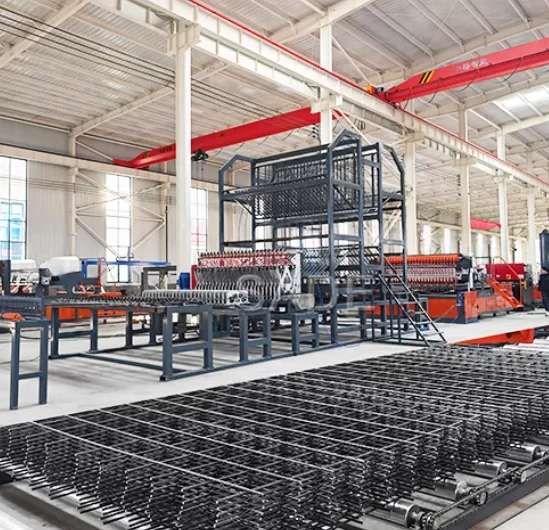
A wire mesh welding machine is a specialized piece of equipment designed to join intersecting wires using electric resistance welding. This process ensures strong joints without additional filler material, resulting in consistent and precise mesh panels. These machines are critical for industries that require high-strength mesh with accurate spacing and uniform welds.
The steel mesh welding machine is ideal for creating reinforcement mesh for concrete structures. These machines are used in producing reinforcement mesh welding machines for slabs, walls, columns, and other concrete elements. They ensure strong, uniform welds that meet the structural requirements of modern buildings and bridges.
Depending on production scale and customization requirements, manufacturers may choose:
Automatic welded wire mesh producing line – For large-scale, high-speed production of standardized mesh panels. These lines feature automated wire feeding, welding, and cutting systems.
Semi-automatic mesh welding machine – Suitable for smaller production units or projects requiring various mesh sizes.
Modern mesh welding machines often include computerized control panels, programmable welding parameters, and automated feeding mechanisms. These features improve precision, reduce human error, and increase overall production efficiency.
A steel mesh welding machine ensures that each weld is consistent and strong. This precision is crucial for creating reinforcement mesh welding machines used in construction projects, where durability and structural integrity are non-negotiable.
Automated welded wire mesh producing lines can produce meters of mesh per minute, significantly improving output compared to manual welding. High-speed wire mesh welding machines reduce labor costs and minimize material waste.
Wire mesh welding machines can handle various wire diameters and mesh sizes. Their applications include:
Construction: Reinforcement mesh for concrete slabs, walls, and columns.
Fencing: Security fences, agricultural enclosures, and industrial barriers.
Industrial grids: Filters, cages, and partitions.
Although investing in a wire mesh welding machine may require upfront capital, the long-term benefits are significant. Automated machines reduce labor costs, improve quality consistency, and minimize material wastage, resulting in overall cost savings.
Modern steel mesh welding machines are built for durability. With proper maintenance, these machines can last for years, delivering consistent performance and maintaining weld quality throughout their lifespan.
Selecting a reputable wire mesh welding machine manufacturer is critical for ensuring high-quality equipment and reliable after-sales support. When evaluating manufacturers, consider the following:
Machine capacity and production speed.
Automation level: fully automatic, semi-automatic, or manual.
Ability to handle various wire diameters and mesh sizes.
Availability of technical support and spare parts.
Customer reviews and reputation in the industry.
Working with an experienced wire mesh welding machine manufacturer ensures that your equipment meets production needs, maintains safety standards, and offers longevity.
In today’s industrial and construction sectors, wire mesh welding machines are indispensable. They provide unmatched precision, efficiency, and durability, making them ideal for producing steel mesh welding machines, reinforcement mesh welding machines, and welded wire mesh producing lines.
Investing in a high-quality mesh welding machine from a trusted wire mesh welding machine manufacturer ensures consistent output, reduced labor costs, and long-term reliability. As the demand for durable mesh products grows in construction, fencing, and industrial applications, these machines continue to be the backbone of efficient and precise mesh production.
1. What is the main purpose of a wire mesh welding machine?
A wire mesh welding machine is used to join intersecting wires through electric resistance welding, producing strong, uniform welded mesh panels for construction, fencing, and industrial applications.
2. What is the difference between a steel mesh welding machine and a regular mesh welder?
A steel mesh welding machine is specifically designed for heavier wires and larger mesh panels, often used for reinforcement mesh in concrete structures, while regular mesh welding machines may handle lighter gauge wires for fencing or decorative applications.
3. How do welded wire mesh producing lines improve productivity?
Automated welded wire mesh producing lines combine wire feeding, welding, and cutting into a continuous process, significantly increasing output and reducing labor requirements compared to manual welding.
4. What should I look for when choosing a wire mesh welding machine manufacturer?
Consider machine capacity, automation level, after-sales support, ability to handle various wire sizes, and the manufacturer’s reputation in the industry.
5. Can reinforcement mesh welding machines be used for different wire diameters?
Yes. Most modern reinforcement mesh welding machines are adjustable to handle a range of wire diameters and mesh sizes, making them versatile for various construction and industrial projects.

High Precision Wedge Wire Screen Welding Machine Factory Suppliers in China


Nov 10, 2026
Technical Factors Influencing the Gabion Machine Price


