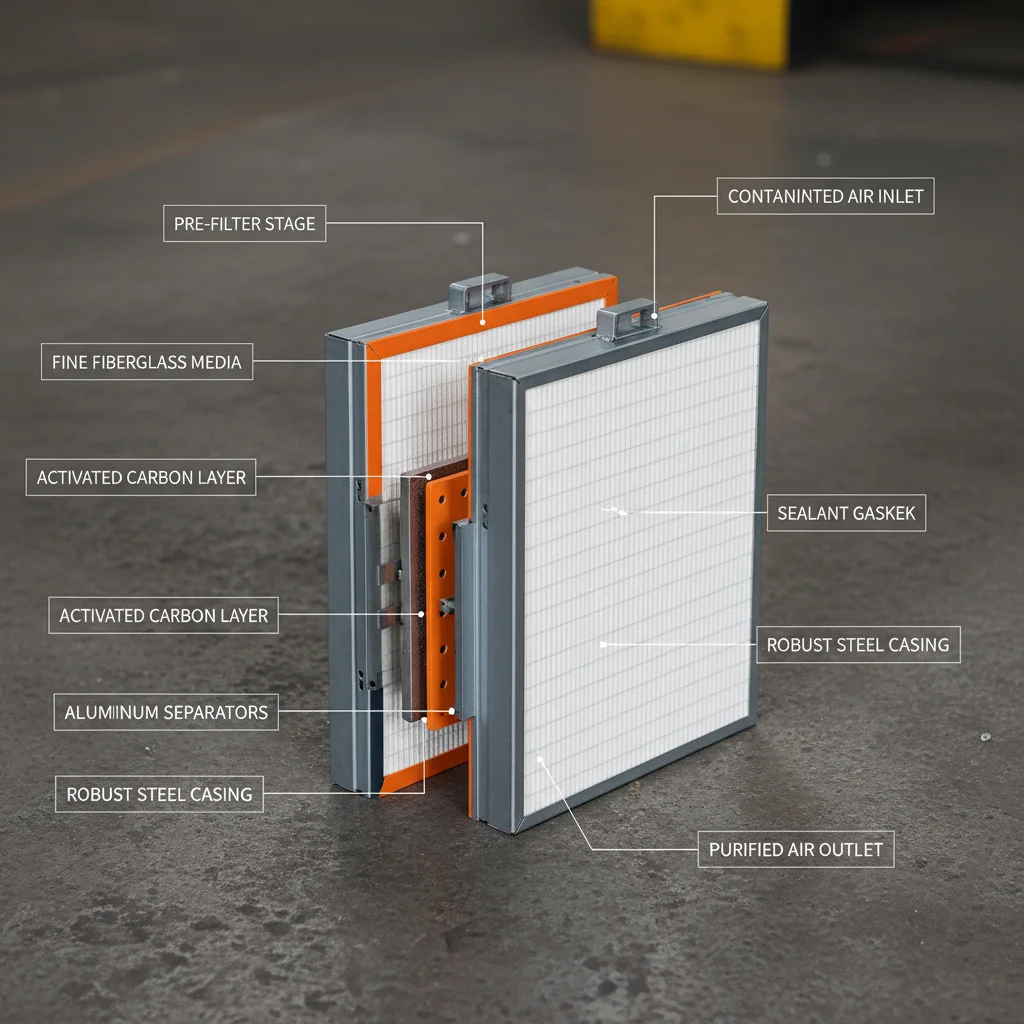
In the modern industrial landscape, the demand for high-precision security infrastructure has led to the integration of advanced manufacturing technologies. While environmental controls like an ozone purifier machine are essential for air quality in specialized facilities, the backbone of physical security remains the high-quality wire mesh fence. These systems provide the critical perimeter protection required for airports, military installations, and industrial complexes worldwide.
The evolution of fence production has shifted from manual labor to semi-automatic and fully automatic systems. Modern semi-automatic fence welding machines now allow for the seamless creation of 3D fences and 2D anti-climb fences, ensuring that the structural integrity of the mesh is consistent across every panel. By integrating welding and bending into a single production line, manufacturers can drastically reduce lead times and human error.
Understanding the technical specifications of these machines is vital for operators aiming to increase production capacity. From precise control over wire spacing to the versatility of accommodating various wire diameters, the right machinery transforms raw steel into durable, high-strength barriers. This synergy of engineering and efficiency is what drives the growth of the global security fencing market.

Technical Architecture of Fence Welding Systems
The semi-automatic fence welding machine is a sophisticated assembly designed to handle the end-to-end production of security barriers. Its core architecture consists of three primary modules: the automatic mesh welding machine, the mesh bending machine, and the mesh stacking component. This integrated approach allows for the creation of 3D and 2D anti-climb fences within a single operational line, eliminating the need for multiple disparate machines.
To support the main welding line, an auxiliary wire straightening and cutting machine is employed. This ensures that the steel bars are perfectly aligned and cut to precise lengths before they enter the welding phase. Much like how an ozone purifier machine maintains a controlled environment, these auxiliary tools maintain the "material environment," ensuring that raw inputs meet the strict tolerances required for high-quality industrial welding.
Enhancing Production Efficiency and Labor Savings
One of the primary drivers for adopting semi-automatic welding technology is the drastic reduction in labor costs. By automating the welding and bending processes into one continuous line, manufacturers can produce complex 3D fence panels with a fraction of the workforce previously required. This transition not only lowers overhead but also minimizes the risk of human error in wire spacing and weld strength.
High efficiency is achieved through precise timing and mechanical synchronization. The machines are capable of maintaining high output rates without sacrificing the uniformity of the mesh. This consistency is crucial for large-scale infrastructure projects where thousands of identical panels must be deployed across a perimeter, ensuring there are no weak points in the security barrier.
Furthermore, the ability to stack finished mesh automatically reduces handling time and prevents deformation of the panels during the cooling phase. By optimizing the movement of materials from the welding head to the stacking area, the production cycle is shortened, allowing factories to increase their daily output and meet tighter project deadlines.
Versatility in Mesh Design and Applications
The versatility of the wire mesh welding machine allows it to cater to a diverse range of industrial needs. Whether producing heavy-duty road mesh, reinforcing mesh for construction, or explosion-proof walls, the machinery can be adjusted to handle various wire diameters and mesh sizes. This adaptability makes it a cornerstone for manufacturers serving multiple sectors.
In specialized environments where purity and precision are paramount—similar to the standards maintained by an ozone purifier machine—these welding machines provide the precise control over wire spacing and strength necessary for high-spec security applications, such as anti-climb fencing for high-security zones.
From simple shelf brackets to complex 3D security fences, the range of applications is vast. The ability to switch between different wire types and diameters ensures that the manufacturer can respond quickly to market demands without needing to invest in entirely new production lines for every new product variant.
Comparative Analysis of Model Performance
When choosing between different equipment models, such as the HLW2500B and the HLW3000B, the primary consideration is the maximum mesh width and the scale of the intended project. While both models share the same wire diameter capabilities (3-6mm) and welding speeds, the HLW3000B provides a wider production capacity, which is essential for large-scale industrial paneling.
Performance metrics focus on the balance between speed and precision. With welding speeds ranging from 80 to 122 times per minute, these machines ensure a rapid throughput while maintaining the structural integrity of each joint. This balance is critical for maintaining a competitive edge in the manufacturing of high-strength wire products.
Production Efficiency Rating for Welding Machine Models
Quality Control in High-Strength Mesh Production
Quality control in fence welding is centered on the uniformity of the weld. Variations in welding strength can lead to structural failures, particularly in anti-climb fences where the mesh is designed to resist significant external force. The use of precise electronic controls allows for the standardization of each weld point, ensuring the mesh is durable and reliable.
Consistent quality is also dependent on the quality of the input material. By utilizing integrated straightening and cutting machines, the equipment ensures that every steel bar is perfectly linear. This prevents gaps or overlaps during the welding process, resulting in a professional finish that meets international safety and security standards.
Industrial Integration and Workflow Optimization
Integrating a semi-automatic welding line into a factory requires a strategic layout to maximize the flow of materials. By positioning the straightening unit, welding machine, and bending unit in a linear sequence, manufacturers can create a "lean" production environment. This minimizes the movement of personnel and reduces the time wasted between different stages of fabrication.
The addition of the stacking part at the end of the line is a crucial step in workflow optimization. It allows for the orderly accumulation of finished products, which simplifies the subsequent galvanizing and powder-coating processes. Efficient stacking ensures that panels are not scratched or bent during transport to the finishing department.
Furthermore, the ability to program different mesh sizes and spacings allows for rapid changeovers. In a market where customer requirements vary from standard road mesh to custom explosion-proof walls, the agility of the machinery determines the company's ability to scale and diversify its product offering.
Specification Standards for Modern Welding Machines
The technical specifications of the HLW series highlight the capacity for heavy-duty industrial use. With a wire diameter range of 3-6mm, these machines can produce everything from light residential fencing to heavy-duty industrial barriers. The spacing flexibility (up to 300mm for both line and cross wires) allows for a vast array of aperture sizes.
The physical footprint of the machinery—up to 10000mm in length—reflects the scale of the automated process. This length is necessary to accommodate the full sequence of welding, bending, and stacking, ensuring that the process remains continuous and uninterrupted.
To ensure long-term reliability, these machines are built with industrial-grade components designed to withstand the rigors of 24/7 operation. Proper maintenance of these components ensures that the welding speed remains consistent and the precision of the wire spacing does not drift over time.
Technical Comparison of HLW Series Welding Machines
| Model Variant |
Max Mesh Width |
Wire Diameter Range |
Max Product Length |
| HLW2500B |
2500mm |
3-6mm |
3m |
| HLW3000B |
3000mm |
3-6mm |
3m |
| Standard Range |
2500-3000mm |
3-6mm |
Up to 3m |
| Spacing Cap. |
50-300mm (Line) |
25-300mm (Cross) |
Customizable |
| Speed Range |
80-122 times/min |
Constant |
Industrial Grade |
| Footprint |
10m Length |
2-3m Width |
2m Height |
FAQS
2D fencing is flat, providing a standard barrier. 3D fencing incorporates a bending process that creates a V-shaped fold in the panel, which significantly increases the structural rigidity and strength of the fence without adding extra material weight. Our machines handle both automatically.
Yes, the HLW series is designed for versatility, supporting wire diameters from 3mm up to 6mm. This allows manufacturers to switch between light-duty perimeter fences and heavy-duty security or reinforcing mesh easily.
By combining welding, bending, and stacking into one continuous line, the machine replaces multiple manual steps. One operator can oversee a process that previously required a team, drastically reducing payroll and human error.
Reinforcing mesh produced by these machines is widely used in concrete slabs, road construction, and wall reinforcement to provide tensile strength and prevent cracking under heavy loads.
While the welding machine does the primary work, an auxiliary straightening and cutting machine is highly recommended to ensure the raw steel bars are perfectly straight, which is essential for maintaining precise mesh spacing.
The machines operate at a welding speed of 80 to 122 times per minute. Depending on the mesh density and size, a standard panel can be welded and bent in a very short time, allowing for high-volume daily output.
Conclusion
The transition toward semi-automatic fence welding technology represents a significant leap in industrial efficiency and security infrastructure quality. By integrating the processes of welding, bending, and stacking, manufacturers can produce high-strength 3D and 2D fences with unprecedented precision and speed. The ability to maintain strict control over wire spacing and weld strength ensures that the resulting products meet the demanding requirements of modern security and construction sectors.
Looking ahead, the integration of further automation and smarter control systems will continue to drive down costs while increasing the durability of wire mesh products. For businesses seeking to scale their production and improve their competitive standing, investing in high-performance welding machinery is no longer an option but a necessity. To explore more about these industrial solutions, visit our website: www.meshmachinery.com.